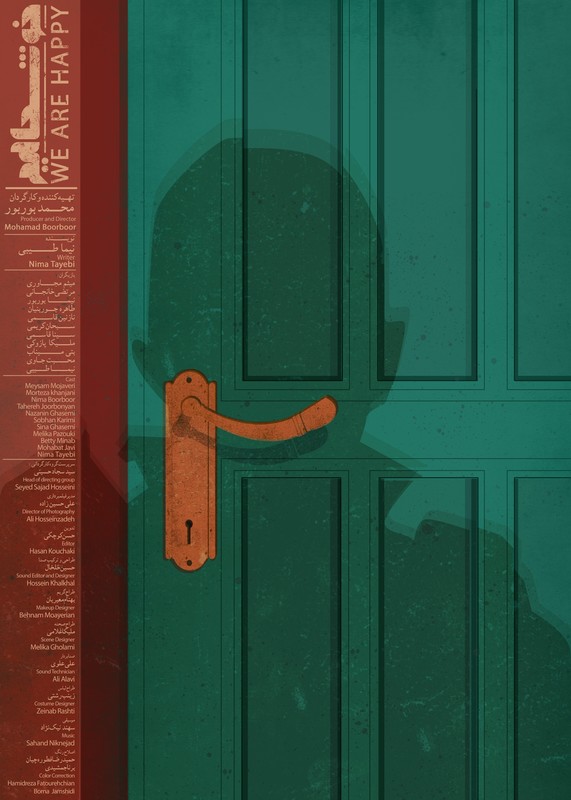
A short film by Iranian filmmaker Mohamad Boorboor, We Are Happy presents a dystopian world where happiness is no longer a human emotion but a social obligation enforced through authority and surveillance.
Set in a city where disturbance is treated as a crime, the film follows an officer assigned to monitor people’s laughter and maintain public happiness. As he gradually discovers the human consequences of the system he serves, his mission transforms into a personal and moral conflict against the machinery of control itself.
The film builds a cold and oppressive atmosphere through rigid framing, controlled visual composition, and restrained movement inside the cinematic space. Its visual language relies heavily on symbolism and dark irony, transforming an absurd premise into a sharp political and psychological commentary.
Rather than focusing on direct political statements, the film creates tension through mood, silence, repetition, and visual discipline, reflecting the collapse of individuality within authoritarian structures.
At the 4th edition of the Kobani International Film Festival in 2023, Yılmaz Güney Edition – Part 2, the film received the Best Director Award in recognition of its cinematic vision and directorial approach.
Film Information
- Original Title: We Are Happy
- Director: Mohamad Boorboor
- Writer: Mohamad Boorboor
- Production Year: 2022
- Country: Iran
- Duration: 19 min 26 sec
- Format: Short Film
- Genre: Drama / Dark Comedy / Dystopian
About the Director: Mohamad Boorboor
Mohamad Boorboor is an Iranian filmmaker working in independent cinema, focusing on symbolic and socially driven narratives. His films often combine dark humor, dystopian environments, and psychological tension to explore the relationship between authority, fear, and individual identity.
His cinematic style is marked by controlled visual storytelling, restrained atmosphere, and symbolic construction within the frame. Through minimalist narrative structures, he creates emotionally and politically layered cinematic experiences.
We Are Happy received the Best Director Award at the 4th edition of the Kobani International Film Festival in 2023, Yılmaz Güney Edition – Part 2, in recognition of its dystopian cinematic vision and its sharp use of dark satire to examine systems of control, surveillance, and forced conformity.