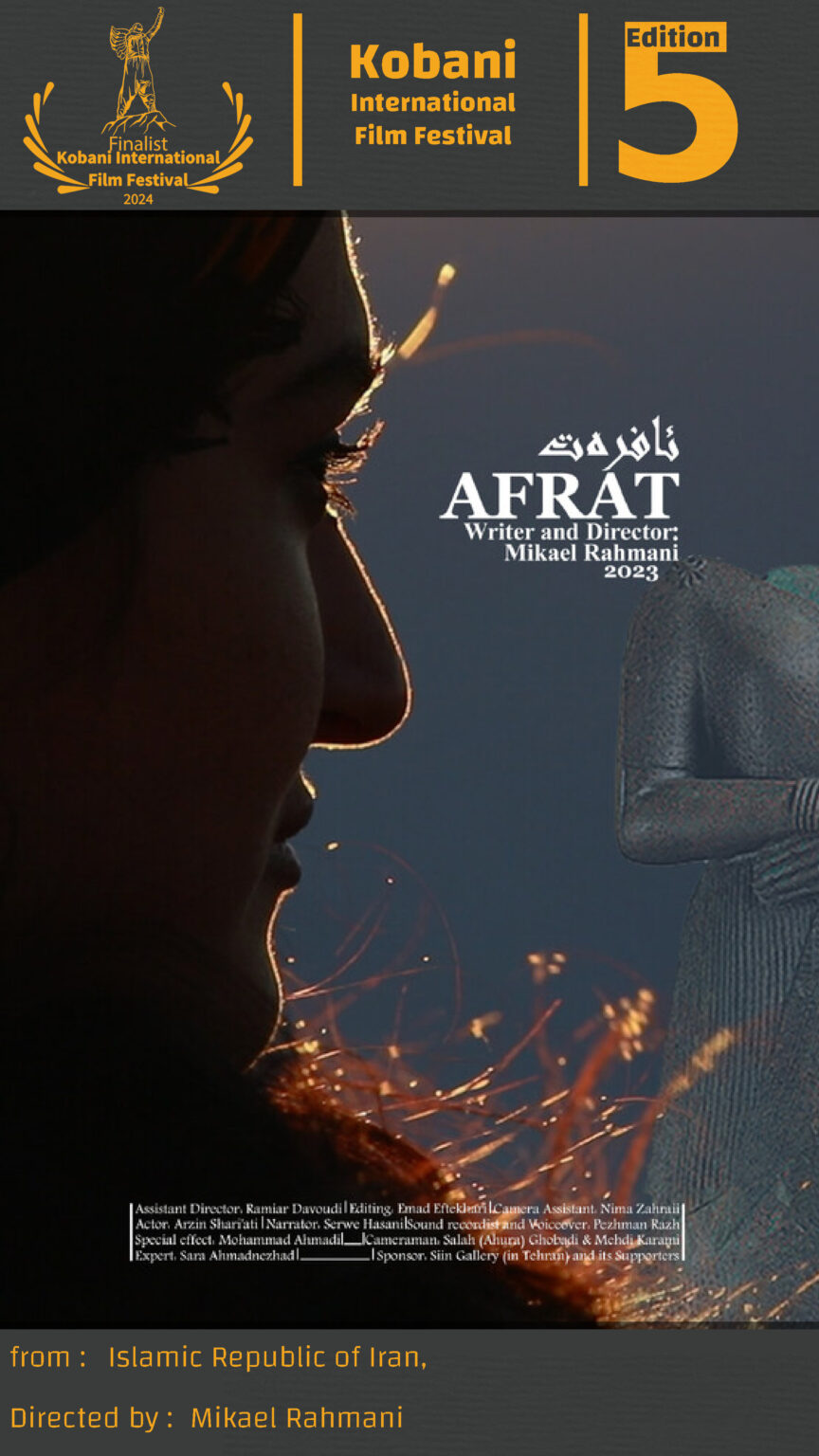
Award: Best Documentary Film – 5th edition of the Kobani International Film Festival 2024 (Taha Karimi Edition)
Film Synopsis:
Afrat approaches the image of Kurdish women through a cinematic and historical lens that moves between visual memory, identity, and cultural representation. Structured in two interconnected parts, the film explores how women have been represented in visual arts from ancient civilizations to contemporary times, before shifting toward the political and social realities surrounding Kurdish women within the historical context of Kurdistan.
Rather than relying on conventional documentary narration, the film builds its language through reconstructed imagery, archival photographs, ancient artifacts, visual symbolism, and reflective narration, creating a cinematic essay suspended between documentary, visual anthropology, and artistic meditation.
Its visual atmosphere is shaped by slow rhythm, poetic imagery, and layered historical references, transforming the documentary experience into a contemplative cinematic journey about memory, identity, femininity, and representation.
About the Director:
Mikael Rahmani is a Kurdish contemporary artist, writer, and filmmaker born in Sanandaj, Kurdistan–Iran, in 1987. His artistic and cinematic work moves fluidly between cinema, video art, visual research, and contemporary artistic expression.
Rahmani’s projects are deeply connected to cultural memory, identity, and the relationship between image and history, often combining visual experimentation with historical and philosophical inquiry. His cinematic language tends toward visual essays and hybrid forms that blur the boundaries between documentary cinema, archive, and contemporary art installation.
He participated in several workshops and artistic programs related to photography, cinema, environmental art, and visual research, including collaborations with the Iranian Youth Cinema Society and contemporary art collectives in Kurdistan and Iran.
Alongside filmmaking, Rahmani is also known for his academic and artistic writings, including works focusing on Kurdish art history, visual aesthetics, and the cultural history of Kurdish communities. He founded and directed the Annual Sanandaj Contemporary Art Festival between 2010 and 2013 and participated in solo and collective exhibitions in Sanandaj, Tehran, and Berlin.
Through Afrat, Rahmani presents a cinematic work that merges historical research with poetic visual storytelling, creating a documentary experience rooted in Kurdish memory, women’s representation, and cultural identity.