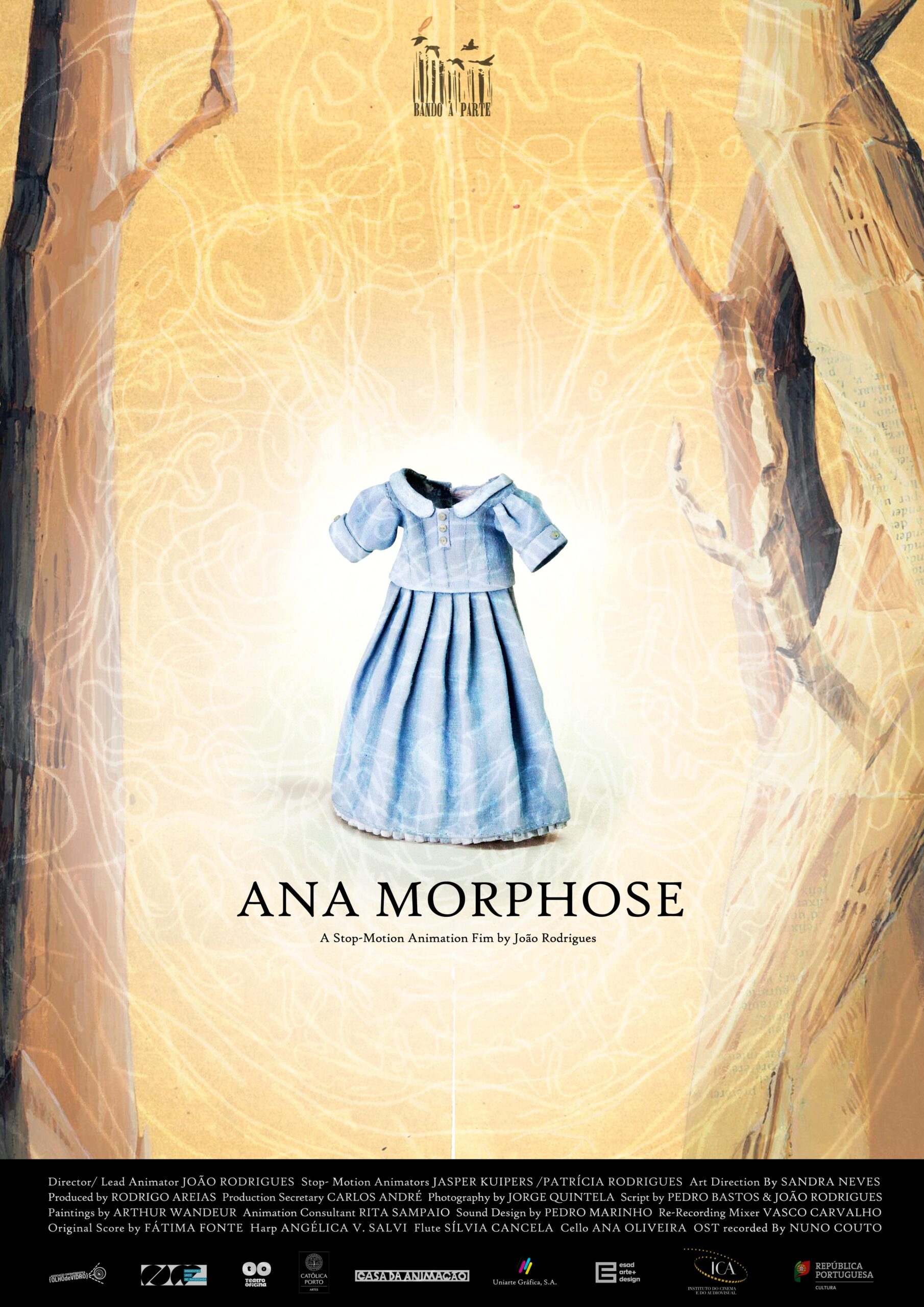
A short animated film by Portuguese filmmaker João Rodrigues, Ana Morphose follows a young girl named Ana who drifts into a surreal world between dream and reality after falling asleep while reading a book.
The film unfolds through an abstract and visually experimental atmosphere where pages, shapes, and printed words transform into living elements that continuously reshape the surrounding world. As the dream evolves, Ana becomes trapped inside a shifting universe governed by imagination, memory, and fear.
Without using dialogue, the film relies entirely on visual rhythm, movement, sound, and stop-motion animation to construct its emotional experience. The handcrafted texture of the animation creates a fragile and intimate cinematic atmosphere that reflects childhood wonder and uncertainty.
João Rodrigues’ artistic approach focuses on visual experimentation, movement, and sensory storytelling rather than conventional narrative structures, creating a cinematic experience rooted in transformation and imagination.
At the 4th edition of the Kobani International Film Festival, Yılmaz Güney Second Edition, the film received the Best Animated Film Award in recognition of its visual creativity and its poetic use of animation language.
Film Information
- Original Title: Ana Morphose
- Director: João Rodrigues
- Production Year: 2023
- Country: Portugal
- Duration: 10 min
- Format: Animated Short Film
- Genre: Animation / Experimental / Fantasy
About the Director: João Rodrigues
João Rodrigues is a Portuguese filmmaker and animation artist born in Porto in 1981. His graduation film Preto & Branco was screened at more than 50 international film festivals worldwide.
He later directed several short and documentary films and founded the dance group “Instant Tanz Company,” which strongly influenced his visual sense of rhythm and movement.
His cinematic work combines animation, visual arts, and experimental storytelling, focusing on transformation, imagination, and handcrafted visual expression rather than traditional dialogue-driven narratives.
Ana Morphose received the Best Animated Film Award at the 4th edition of the Kobani International Film Festival 2023, Yılmaz Güney Second Edition, in recognition of its imaginative visual language and its ability to create a poetic cinematic world through movement, abstraction, and visual transformation.